

This month sees us conclude our introductory look at environmental product declarations (EPDs).
As the construction industry seeks to play its part in decarbonising, EPDs will have a crucial role to play. We may have only scratched the surface of what EPDs can do and how they can help with understanding the life cycle impact of a whole building, but we hope our series of posts has helped you to understand them a little better.
As always, if you’ve got any questions about anything that we cover in the newsletter, contact us and we’ll address them in future issues.

Focus on comparing EPDs
What credits can be claimed for EPDs in certification schemes?
Certification schemes such as BREEAM and LEED make credits available if the specified construction products have environmental product declarations (EPDs). The number of credits varies depending on the type of EPD and whether the EPD has been externally verified. The uses of EPDs also extend beyond certification schemes.
EPDs report a variety of environmental impacts, including global warming potential (GWP) and ozone depletion potential (ODP). Anyone who has specified thermal insulation will know these terms and be familiar with seeing them on product literature, and EPDs formalise the declaration of these impacts and allow them to be compared between different manufacturers and products.
Since the launch of its updated new construction standard in 2018, BREEAM has shifted focus away from ratings given by the Green Guide to Specification. Instead, credits are awarded for the availability of EPDs. As older versions of the standard fall out of use, the Green Guide ratings will eventually become completely redundant.
BREEAM requires EPDs to be verified by a third-party. For the Mat 02 category, it awards points based on whether EPDs are generic (0.5 points), manufacturer-specific (0.75 points) or product-specific (1.5 points). However, if an EPD is not externally verified to EN 15804 then it cannot contribute to claiming points.
Polyfoam resource
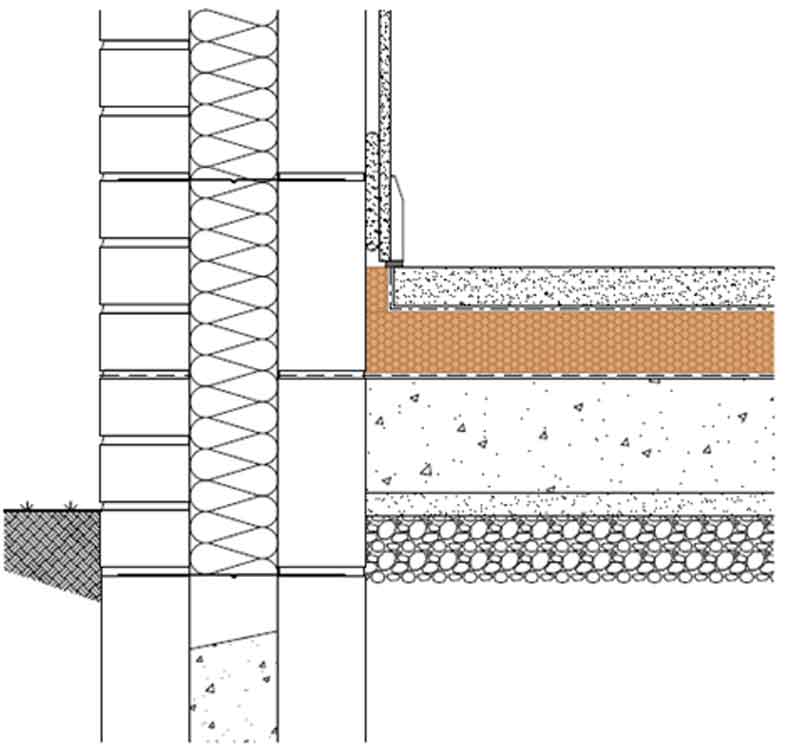
We at Polyfoam XPS have launched new CAD details to showcase best practice.
The new CAD details will help designers, specifiers and installers get the best results from extruded polystyrene (XPS) insulation.
The details, which are available in both PDF and DWG format, reflect current best practice in traditional XPS applications like ground floors, basements, and inverted flat roofs. They also include a new application, showcasing how XPS can be used in masonry cavity walls below DPC.
The details can be viewed and downloaded from the technical support section of our website.

What’s caught our eye this month
Golden thread: buyer beware! – via bimplus.co.uk
Johnny Furlong offers an update on the golden thread and provides a warning about those claiming to offer ‘approved’ solutions to help with safety regulations
Just a third of projects achieve sustainability goals – via architecturaltechnology.com
The report found that only a third of construction professionals usually manage to achieve delivering sustainable outcomes within a project.
Subscribe
Thanks for reading this issue of The Build Up by Polyfoam XPS. To receive the new issue every month SUBSCRIBE